Pigmentation is the color of the skin. When it is darker, it is called hyperpigmentation and when it is lighter, it is called hypopigmentation. Hyperpigmentation or hypopigmentation causes uneven skin color.
Melanocyte is the cells that produce the pigment called melanin. Melanin causes our skin to look pigmented or brown. The various shades of our skin color are determined by how heavily the pigment or melanin is laden into our skin cells. The higher the concentration of melanin the darker we look; the lower the concentration of melanin the fairer we appear.
To simplify the complex process of the hyperpigmentation, I would break it down into four steps. First, the melanocyte produces melanin. Second, the melanin is transferred to epidermal skin cells. Third, there is a gathering or accumulation of the melanin laden epidermal cells. Fourth, there is sluggish turnover of the melanin laden turnover epidermal cells. Fifth, the seepage of the melanin into the deeper layer called dermis.
The effective melasma treatment of the hyperpigmentation lies in treating each step. Different ingredient works in different step. So, you need a blend of different ingredients or different procedures for hyperpigmentation treatment to be successful. In this article, we will be focusing on melasma.
The trigger for different people may be different or a combination.

Melasma is a blotchy hyperpigmentation in your face that can appear at any age, can be seen in both female and men. Melasma is very difficult to treat, so taking the precautions to prevent its appearance is highly recommended.

At home, you can start with a good antioxidant serum, safe skin lightening cream and broad-spectrum sunscreen with a minimum SPF of 30.
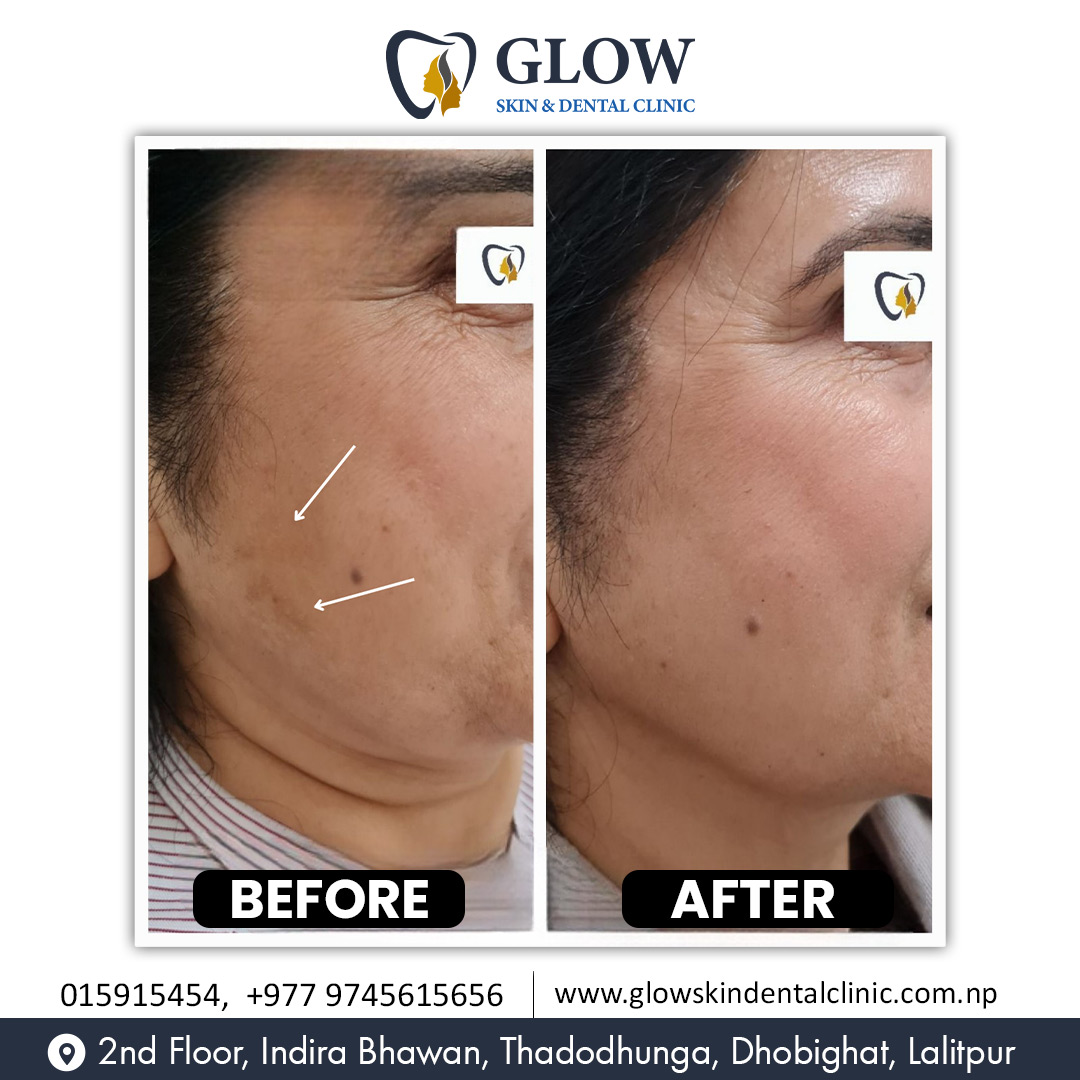
We Glow Skin & Dental Clinic offers a range of safe, steroid-free hyperpigmentation treatments, including prescription-strength skin lightening creams, chemical peels, depigmenting mesotherapy, microdermabrasion, exosomes, and more.
Melasma is the most difficult type of hyperpigmentation to treat. Generally, it is said that melasma is incurable.
However, it can be significantly lightened with the melasma treatment. In our experience, it takes many years to completely get rid of melasma, the longest we have seen is eight years, while the earliest recovery we have observed is one year.
The sooner you start the melasma treatment, he higher the chances of early fading. A delay in treatment results in darkening of existing pigmentation and spreading to new spots.
Avoiding direct sunlight and heat on your face as well as other triggering factors, wearing sunscreen and applying skin lightening creams regularly are crucial in your melasma. It is impossible to lighten melasma if sun or heat exposure continues.
The simple understanding is UV rays are invisible rays, in Nepali we call it “Ujyalo”. They are present indoors, even on cloudy days. Any reflective surface tends to increase UV exposure by reflecting it; hence you notice getting darker after swimming or beach holidays even on a cloudy day. Both water and sand both reflect UV rays. Other reflective surfaces like snow, tile, tin, mirror or glass can also increase your UV exposure.
In my experience, any hyperpigmentation treatment that claims to fix melasma quickly tends to darken it more after stopping those treatments. Seek medical advice from a board-certified dermatologist only!
Melasma requires years of persistent treatment and care.
A chemical peel is safe for melasma if right composition is chosen and applied correctly. Many hyperpigmentation treatments are available and are selected based on your skin condition and daily activities.
Generally, we choose chemical peel that has minimum downtime, such as redness, irritation, dryness or skin flaking. We don’t want to trigger your pigment producing cells, but at the same time we want the skin turnover to reset and the ingredients in the chemical peel to inhibit the multiple steps of the pigment production and transfer.
A stronger peel doesn’t necessarily mean better. A chemical peel is selected based on n depending upon how well your skin is prepped for the procedure and how well you can take care afterwards. It is not a one size fits all.
A well-chosen chemical peel can do wonders for your melasma! You may notice the changes as early as after the one session, or sometimes it may take up to 5 sessions to see some noticeable improvement, provided you have cared for your skin at home.